
——三十年,他走了多难的路
No GPS, no rain gear, no rescue team — just a bamboo staff, a straw hat, and thirty years of walking.
今天,一个准备徒步几个月的人,出发前要往背包里塞多少东西?
What does a modern hiker pack before setting out on a months-long trek?
防水背包、睡袋、冲锋衣、羽绒服、卫星定位、头灯、净水片、止痛药、备用电池,外加一份保险。就算装备到牙齿,走过长线的人还是会告诉你:路上有多苦。
A waterproof pack. A sleeping bag. A breathable shell jacket. GPS, a headlamp, water filters, painkillers, spare batteries — and, if you're wise, a rescue insurance policy. And still, anyone who has finished a long trail will tell you the same thing: the road is brutal.
四百年前,有个中国人把这些统统丢在一边。
Four hundred years ago, a Chinese man threw all of that away.
徐霞客的全部装备,是一根竹杖、一双草鞋、一顶斗笠,和一小包换洗衣物。没有地图——或者说,他要走的地方,根本就没人画过地图。没有向导——有时候连当地农夫都说不清前面的路。没有缆车、没有客栈、没有手机。他连一口像样的饭都保障不了。
Xu Xiake's entire kit was a bamboo staff, a pair of straw sandals, a conical hat, and a small bundle of spare clothes. He had no map — or rather, the places he was going had no maps. He had no guide — sometimes even the local farmers couldn't tell him what lay ahead. No cable car, no inn, no phone. He couldn't even count on a proper meal.
今天的人问他:靠什么走那么远? "How did he get that far?" people ask today. 答案也许都藏在三十年的路里。
Perhaps the answer is hidden in those thirty years on the road.
第一次冒险,就差点把命留在山上
Almost died on his first big climb
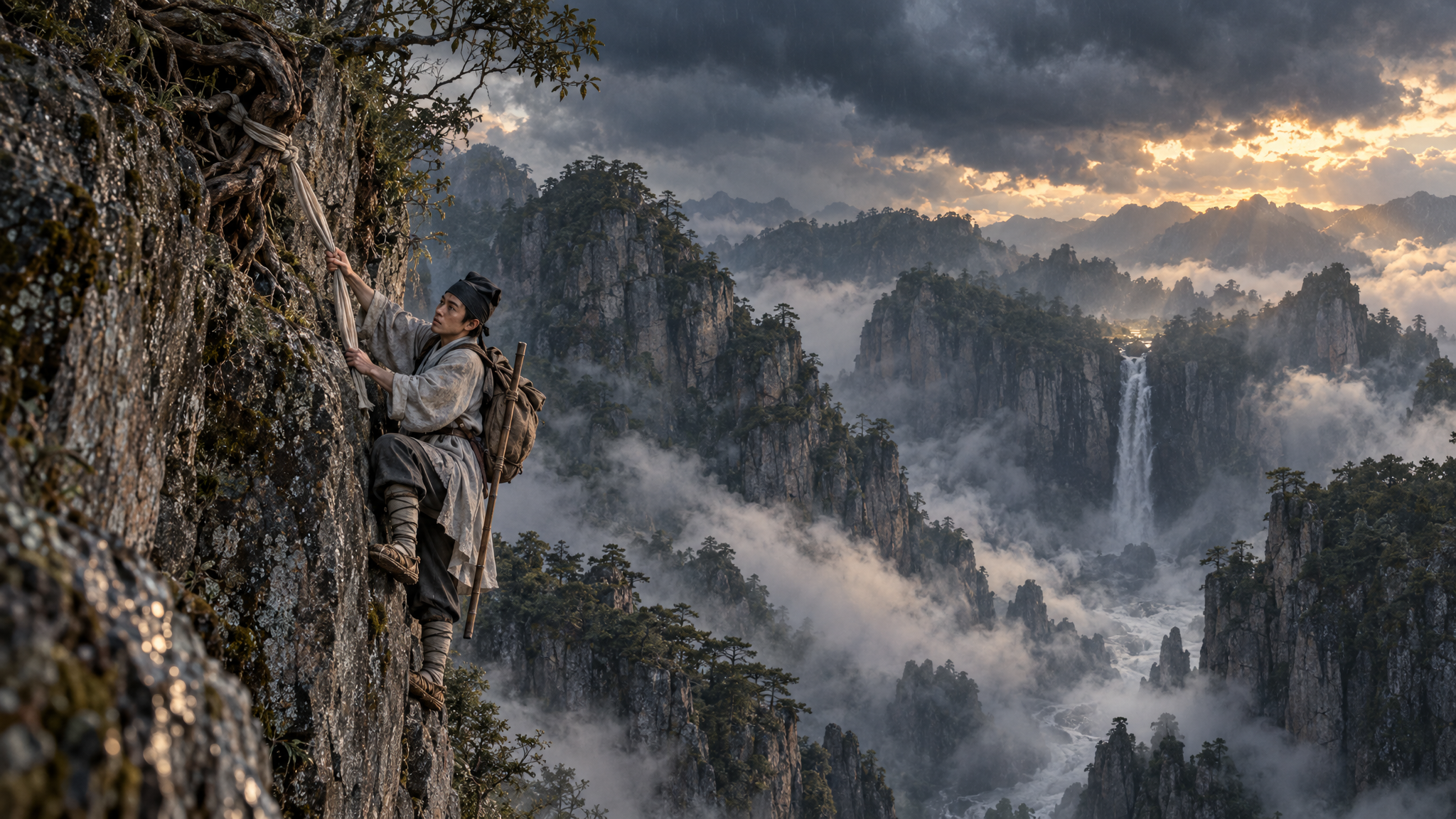
1613 年,他第一次游雁荡山。古书上说山顶有个雁湖,山下大瀑布的水就是从那里来的。他要去看个究竟,便独自往无人敢走的绝壁攀。
In 1613, Xu Xiake made his first journey to Mount Yandang. The old records said a lake lay at the summit, and that the great waterfall below flowed from it. He wanted to see it with his own eyes, so he clambered alone up a cliff no one dared to go near.
崖壁太陡。他解下绑腿布,一头拴在树上,一头拴住自己,一寸一寸往崖下探。探到半空,往下是万丈深渊,想往回爬,绳子已经不够长。他悬在岩壁上,上不来,也下不去。
The rock face was sheer. He untied his leg cloth, lashed one end to a tree and the other around himself, and lowered himself down foot by foot. Midway, he looked down — a bottomless drop. He tried to climb back; the rope was not long enough. He hung there, unable to go up, unable to go down.
后来是当地僧人把他拉回来的。那一次,他在日记里只记了几个字——差一点,就掉下去了。
Local monks finally pulled him back up. All he wrote in his diary that day were a few words — he nearly fell.
但他没有因此回头。他反倒得出一条自己的道理:要看到别人看不到的东西,就得走到别人走不到的地方。
But he didn't turn back. Instead he drew a lesson: if you want to see what no one else has seen, you have to go where no one else has walked.
雪里、水里、风里
Snow, water, wind
1616 年正月,他二上黄山。正值深冬,山道积雪没膝,同行的人劝他别上,他还是上了。
In the first month of 1616, he climbed Mount Huangshan for the second time. Dead of winter. Snow on the trail up to his knees. His companions urged him to turn around; he went on anyway.
黄山的怪石、奇松、云海是他生平所见最壮丽的景色。他在日记里写,登上那两座主峰,左有天都峰、右有莲花峰,"两峰秀色,俱可手揽"——两座山峰的秀美,似乎伸手就能捧起来。
Huangshan's strange rocks, twisted pines, and seas of cloud were the most magnificent landscape of his life. On the twin summits he wrote, with Heavenly Capital Peak on his left and Lotus Peak on his right, "the beauty of the two peaks might be cupped in the hands."
可代价也不小。那几天他在山上几乎冻僵,雪光刺得眼睛生疼,下山时脚趾已经没了知觉。
The cost was real. For days he was nearly frozen, the glare of snow stung his eyes until they ached, and by the time he descended his toes had lost all feeling.
他走过的许多路都是这样:为看一眼长江上游,他在峡谷里逆流而上,踩着湿滑的石头和湍急的河;为弄清一个洞的走向,他趴着钻进满是蝙蝠、空气呛人的洞口。
Much of the road was like this. To see the upper reaches of the Yangtze, he struggled upstream through narrow gorges over slick stones and rushing water. To find out where a cave led, he crawled on his belly into mouths full of bats and foul air.
三次遇盗,四次断粮
Three robberies, four starvations
三十年里,他三次遇盗,四次断粮。
In thirty years he was robbed three times and ran out of food four times.
在湘江上,他险些命丧盗贼之手——这件事,我们下一篇细讲:那是他三十年中伤得最重的一次。在广西的深山,他身上本就没多少值钱的东西,强盗还是抢走了他仅剩的银两。他雇来挑行李的仆役,有人撑不住这份苦,走到半路撂挑子跑了。徐霞客只好自己背上那口装书、装石头的箱子。
On the Xiang River he came within a hair's breadth of dying at a robber's hands — that story we'll tell in the next piece, for it was the deepest wound of his life. In the mountains of Guangxi he owned almost nothing worth stealing, and the bandits took the last of his silver anyway. The hired porters carrying his pack — some could not bear it and quit halfway. Xu Xiake shouldered the box of books and stones himself.
断粮的时候,他在荒山野岭里找野果,向路边的农家讨一口饭。有人给,他就吃;没人管,他就饿着走。奇怪的是,他几乎不把这种苦写得很惨。更多的时候,他记的是:今天看到了一条书上没有记载的河,今天爬上了一座传说上不去的山。
When there was no food, he searched the wild hills for berries and begged a bowl of rice at roadside farmhouses. Someone fed him, he ate; no one did, he walked on hungry. Curiously, he almost never wrote these miseries down as misery. What he recorded instead: today I saw a river that appears in no book. Today I climbed a mountain that legend said was impossible.
以躯命游
"Traveling with his life"
后人用四个字形容他的旅行——"以躯命游":拿命在旅行。
Later generations summed up his journeys in four characters: yǐ qū mìng yóu — he traveled by staking his very life.
这四个字,很准。他不是坐在茶馆里想象远方的人,他是真把自己的命押在沿途的山路上,一押三十年。到最后,他的双足确实废了——那是后话。
It is accurate. He was no man dreaming of far places over a cup of tea in a teahouse. He truly wagered his life on the mountain roads, year after year, for thirty years. In the end his feet really did fail him. But that is a story for later.
但更奇怪的是,翻开他的游记,你几乎读不到怨。他写得最多的,是惊叹:"这是天下最好的景""世上原来还有这样的地方"。苦是真的,乐也是真的。他用最原始、最苦的方式,换来了最奢侈的东西。
What is stranger: open his diary and you'll find almost no bitterness. What you find is wonder — the finest scenery under heaven; so this is what the world is like. The hardship was real. So was the joy. With the most primitive, most punishing method, he bought the most luxurious thing.
为什么他能一直走下去
Why he kept going
因为对他来说,那不是"受苦",而是"抵达"。
Because for him it was never "suffering." It was arrival.
一个人要是真心爱一件事,别人看他是在吃苦,而他在其中的每一刻,都是满足。徐霞客走的那条路,今天的人恐怕连一天都撑不下来。可他走出了一条让后人仰望的路——不是因为他不苦,而是因为他愿意为心里最重的东西,付出全部代价。
When a person truly loves something, what others see as suffering, he feels in every moment as deep satisfaction. Xu Xiake walked a road that few today could endure for even a single day. Yet he walked a path that future generations still look up to — not because he didn't suffer, but because he was willing to pay the full price for the one thing that mattered most in his heart.
想想那些我们嘴上说"热爱"的事,我们愿意为它付出多少呢?
Think about the things we say we "love" — how much are we truly willing to give for them?
下一篇,是他三十年里最痛的一次。旅伴死在他怀里,他背上朋友的骨灰,又走了一年。
Next piece is the hardest one of his thirty years. His traveling companion died in his arms, and he carried his friend's ashes for another year.